Best Car Dehumidifier UK: Reusable Bags Sized by Vehicle

Wake up to a windscreen you have to wipe from the inside, a musty smell that never lifts, and damp patches on the seats. Condensation in a parked car is a British winter ritual, and the usual fix is a car dehumidifier: a sealed pouch of silica gel that pulls moisture out of the cabin air while the car sits on the drive.
They work, but only within limits, and the limit is set by the weight of gel in the bag. A 250g pouch and a 1kg pouch are not the same product at different prices, they are different tools for different vehicles. This guide sizes the bag to the car, and covers the case most buying guides skip entirely: how to tell whether you have condensation at all, or a leak that no amount of silica gel will fix.
Car dehumidifier bags at a glance
| Bag | Gel weight | Pack | Typical price | Best for |
|---|---|---|---|---|
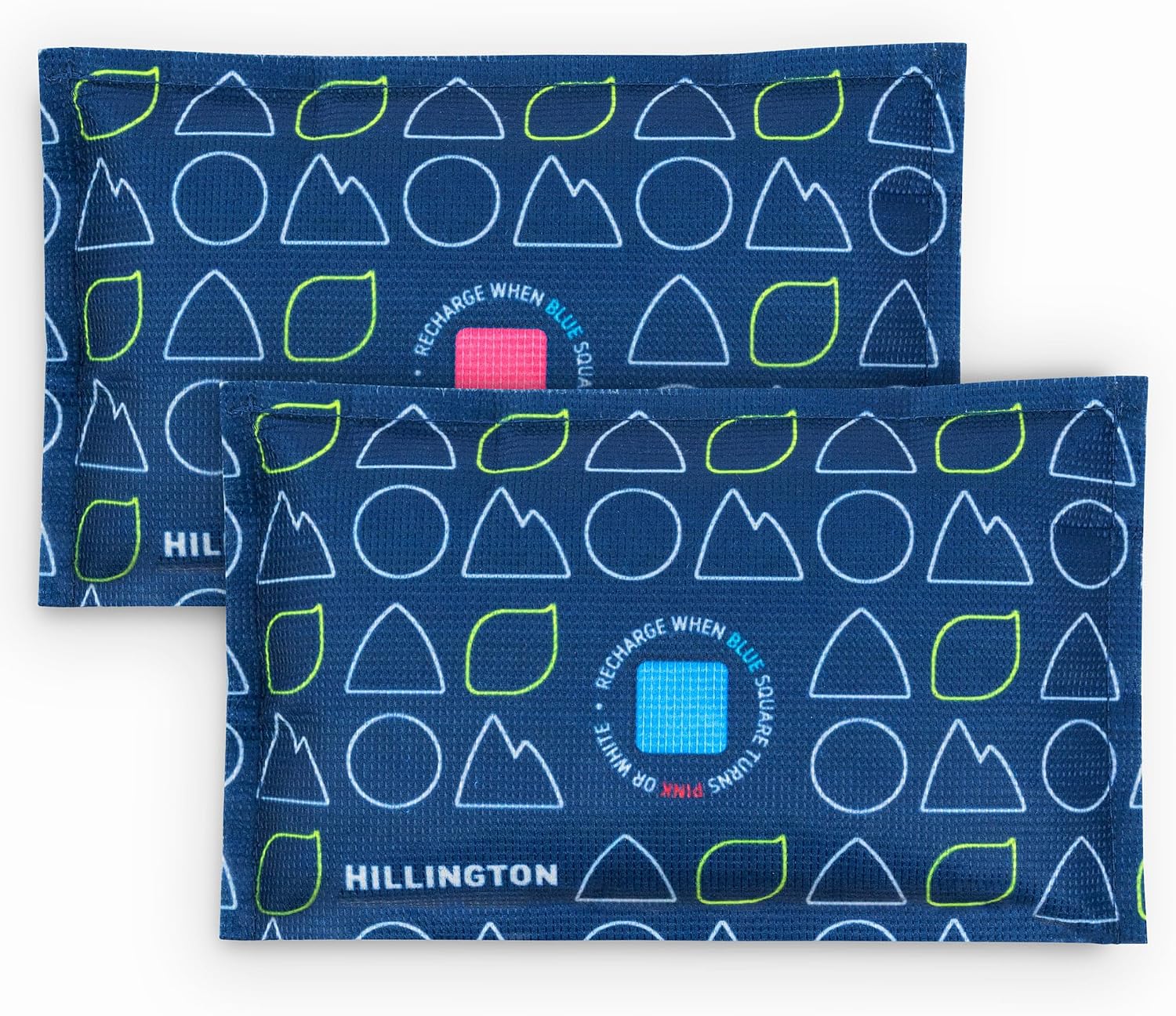
| Hillington 250g 2-pack | 250g | 2 | around £9 | City cars, small hatchbacks, glove box and door pockets |
| Hillington 450g triangle 2-pack | 450g | 2 | around £14 | Vans and caravans, sits against a sloped screen |
| Pingi 350g 2-pack | 350g | 2 | around £17 | Mid-size cars, rotating one bag while the other dries |
| KEPLIN 1kg | 1kg | 1 | around £17 | One badly affected car, single bag, no spare |
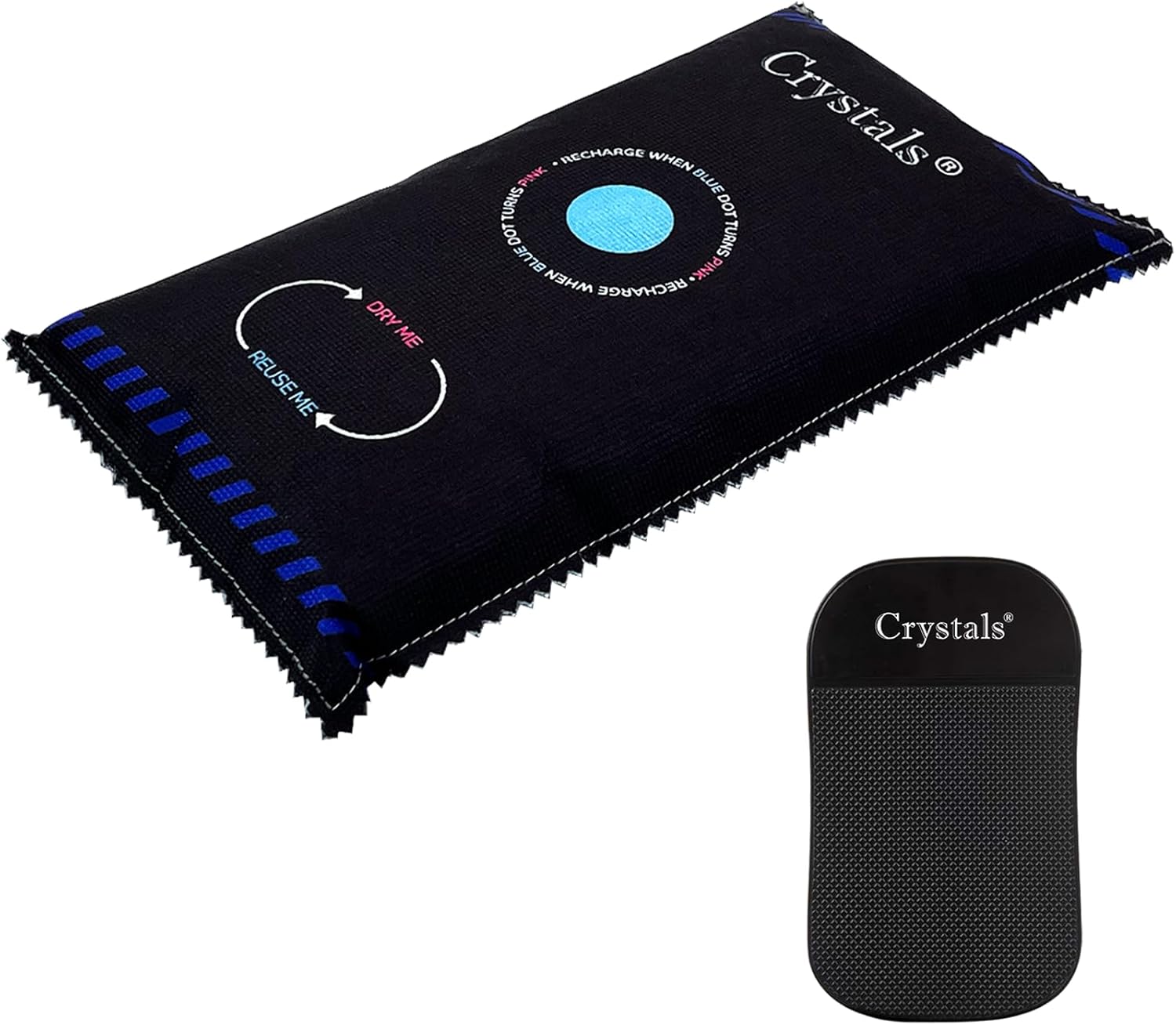
| Crystals 1kg | 1kg | 1 | around £17 | Caravans, vans, narrower dashboards |
| Hillington 1kg 2-pack + mats | 1kg | 2 | around £20 | Estates, MPVs, or anyone who wants a spare in rotation |
Prices move, so treat these as a guide and check the current figure on each product page.
How to size a bag to your car
Silica gel absorbs roughly 30 to 40% of its own weight in water vapour, and it only reaches the top of that range in genuinely humid conditions. So the honest working numbers are:
- 250g bag: holds roughly 75 to 100g of water before it needs drying out.
- 350g bag: roughly 105 to 140g.
- 450g bag: roughly 135 to 180g.
- 1kg bag: roughly 300 to 400g.
That matters because a car with two people breathing in it on a wet commute puts a surprising amount of water into the cabin, before you count wet coats, an umbrella in the footwell, a dog, or snow carried in on boots. In a damp December week a single 250g bag in a regularly used car can saturate in days.
As a rule of thumb:
- City car or small hatchback, used dry: 250g is enough, and a two-pack lets you put one on the dash and one in the boot.
- Family hatchback or saloon: 350g to 450g, or a 1kg bag if the car lives outside.
- Estate, MPV or seven-seater: 1kg, and preferably a two-pack so one can dry while the other works.
- Van, caravan or motorhome: 1kg minimum, and expect to run two. The triangle-shaped bags sit better against a steeply raked screen.
Two smaller bags in different parts of the cabin generally beat one large bag in a single spot, because the air in a parked car does not circulate much.
The picks
Hillington 1kg 2-pack with anti-slip mats
The most complete package here and the one that suits the largest number of UK drivers. Two 1kg bags mean you always have a dry one ready while the other is in the oven, which is the single biggest practical difference between a bag that keeps working through winter and one that sits saturated on the dash from January onwards. The anti-slip mats are not a gimmick either, a 1kg pouch will slide off a smooth dashboard on the first roundabout. See the rest of the range on the Hillington brand page.
Pingi 350g 2-pack
Pingi have been making these longer than most of the Amazon own-label sellers, and the 350g size is an underrated middle ground: enough capacity for a normal family car, light enough to sit on a dashboard without a mat, and supplied as a pair so you can rotate. A sensible default if you are not sure what size you need. More on the Pingi brand page.
Hillington 250g 2-pack
The cheapest way to find out whether a bag solves your problem. At around £9 for two, it is worth trying before spending £20, and if a 250g pouch clears your windscreen overnight then you did not have much of a moisture problem to begin with. Also the right size for glove boxes, door pockets and under seats.
Hillington 450g triangle 2-pack
The shape is the point. A wedge sits flat against a sloped windscreen where a rectangular pouch slumps, which makes these the better choice for vans, campers and caravans where the screen rake is severe and the dashboard shelf is deep.
KEPLIN 1kg
A straightforward DMF-free 1kg bag with an anti-slip mat, sold singly. Good if you have one problem car and no interest in rotating bags, though you will be without protection for the few hours it spends drying out.
Crystals 1kg
Slimmer than most 1kg bags, which suits narrow dashboards and caravan screens where a fat pouch obstructs the view. Otherwise the same silica gel formula as the rest.
How car dehumidifier bags actually work
Silica gel is a porous form of silicon dioxide, and it traps water vapour in its pores rather than dissolving it, which is why a fully loaded bag still feels dry. It is passive: no power, no fan, no noise, nothing to go wrong.
Most bags carry a colour indicator. Orange crystals that turn dark green or black are the modern standard. Older blue-to-pink bags use cobalt chloride, which is being phased out on health grounds, so an orange indicator is generally the newer product.
The gel itself does not wear out quickly. Bags typically last two to three years of seasonal use before absorption noticeably drops off, and the usual failure is the fabric pouch splitting rather than the crystals giving up.
When a bag is the wrong fix
This is the part worth reading before you buy anything. A 1kg bag holds at most around 400g of water, total, before it needs drying. If your carpets are wet, that is nowhere near enough, and you are treating a symptom.
The test: lift the carpet and press the underlay. If the underlay is soaked while the top of the carpet looks fine, water is getting in from somewhere and condensation is not your problem. Genuine condensation shows up on cold glass and hard surfaces, worst on the coldest mornings, and the carpet stays dry underneath.
Common entry points, roughly in order of how often they turn out to be the culprit:
- Blocked scuttle drains. The plenum under the windscreen wipers fills with leaves, the drains block, and water backs up into the passenger footwell. Clear the leaf litter from the base of the windscreen every autumn.
- Sunroof drain tubes. Four tubes run from the sunroof frame down the pillars. When one blocks, water appears at the headlining or runs down an A-pillar during heavy rain.
- Door vapour membrane. The plastic sheet behind the door card diverts water to the drain holes at the bottom of the door. If it is torn or unstuck, water runs onto the carpet edge.
- Boot seals and rear light gaskets. Damp in the spare wheel well almost always comes from here.
- Blocked air-conditioning drain. The evaporator condensate should drain under the car. When the pipe blocks it drains inside, on the passenger side.
Fix the leak first. Then a bag is genuinely useful for mopping up the residual damp while the interior dries out.
How to recharge a saturated bag
- Check the label first. Most bags are oven safe, but only some are microwave safe, and microwaving one that is not can scorch the fabric or melt an inner liner.
- Oven: 100 to 120°C for two to three hours on a tray. Do not be tempted to go hotter, above roughly 150°C you start to damage the gel's pore structure and it holds less water afterwards.
- Microwave, only if the label allows it: medium power in short bursts of two to three minutes, checking between each. Never leave it running unattended.
- Let the bag cool completely before it goes back in the car. A warm bag put straight onto a cold dashboard will sweat.
- The indicator returning to orange is the signal it is done.
In a wet UK winter expect to be doing this every two to four weeks on a car that is used daily, which is exactly why the two-packs are worth the extra few pounds.
Getting the most out of it through winter
- Put the bag in the cabin, on the dashboard or the passenger footwell. The boot is the least useful place, because that is not where the condensation forms.
- Deal with the source. A wet umbrella in a footwell or a damp dog blanket left on a seat will saturate a bag faster than anything the weather does.
- Use the air conditioning on demist rather than recirculation. A/C dries the air, recirculation just moves the moisture around the cabin.
- Take wet floor mats out and dry them at home. Rubber mats trap water underneath against the carpet.
- Start the season with a dry interior. Adding a bag to already sodden carpets will use up its whole capacity in a few days and achieve very little.
Frequently asked questions
Do car dehumidifier bags actually work? Yes, for condensation. They measurably reduce overnight misting on the inside of the glass in a car that is otherwise dry. They will not dry out wet carpets or fix a leak.
Where is the best place to put one? On the dashboard or in the passenger footwell, with an anti-slip mat if it is a 1kg bag. Two smaller bags in different parts of the cabin work better than one big one, because air barely moves in a parked car.
How long does a car dehumidifier bag last before it needs drying? Anywhere from a few days to a couple of months, depending on the weight of the bag and how wet the car gets. In a British winter, a 250g bag in a daily driver may need drying weekly, while a 1kg bag in a garaged car might last all season.
Can you put a car dehumidifier bag in the microwave? Only if the manufacturer says so. Check the label. An oven at 100 to 120°C is the safer method for any bag and works for all of them.
Is silica gel dangerous? The gel itself is non-toxic, but it is not edible and the beads are a choking risk, so keep bags away from children and pets. Modern DMF-free and cobalt-free bags avoid the older chemical concerns.
Bag or an electric car dehumidifier? For a parked car, a bag. Electric units need power the car is not supplying while it sits, and running one off the battery is a good way to arrive at a flat car. Electric dehumidifiers make sense for garages and caravans on hook-up, not for a daily driver on a drive.
Will one stop rust? It helps, by keeping cabin humidity down around seatbelt anchors and door bottoms. It is not a substitute for fixing water ingress, which is what causes the rust that actually kills cars.
If the damp is in the house too
A car bag is a very small dehumidifier. If you are also dealing with condensation on the windows at home, mould in a bedroom corner, or washing that will not dry, that is a job for a powered unit rather than silica gel. Start with our guide to the best dehumidifiers in the UK by room size, or if there is no convenient socket, the rundown of battery and cordless dehumidifiers and what actually works.
For most drivers, the answer here is simpler: buy the two-pack that matches your vehicle size, keep one drying while the other works, and check your scuttle drains before you blame the weather.